“Selfish”: (of a person, action, or motive) lacking consideration for other people.
Autistic people rarely get to be selfish.
The existence of “accommodations” might lead you to believe that, actually, Autistic people are frequently selfish. After all, they are the ones asking the non-Autistic population to adjust their behaviours, right? However, consider how much and how often those same Autistic people are really the ones accommodating others. We are constantly masking ourselves to be more palatable. It’s not even asked of us; it’s assumed. We are also the ones living with the consequences of being unselfish, having a meltdown in the bathroom stall as quietly as possible before returning to the group.
I can’t remember the last time I, as an Autistic person, unapologetically took up as much space as I needed. What I can remember is the last time I disassociated in public to cope with the overwhelming environment my friends chose as our hangout spot. We don’t consider driving a friend to the airport or bringing a coworker coffee a burden; we consider it a part of building a thriving community. So why is it that when suddenly it’s an Autistic person asking for something, it is an “accommodation?”
Let’s look at an example in the form of “disclosing” autism. When I introduce myself to someone new, it usually comes up (as naturally as I can manage) that I’m Autistic. That’s because it is socially MY responsibility to inform others about my disability and MY responsibility to seek out accommodations. Consider that no one has to disclose they don’t like cold weather; they simply do what is best for themselves (in this case, wearing a jacket), and everyone accepts it. Know someone long enough and they don’t think twice about offering to let you borrow a pair of mittens when it snows. Someone with a peanut allergy isn’t asking for accommodations by choosing the nut-free meal at a restaurant; they’re just prioritizing their health and well-being.
Disclosure is risky for Autistic people because of this lens of “selfishness” through which we view “accommodations.” If you really believe that Autistic people are protected in non-Autistic communities, then you don’t speak with enough Autistic people. The discrimination associated with Autism will compound when I disclose, all for the meagre reward of consideration.
Autistic advocacy is another example. Too often, non-Autistic people will stretch the boundaries of what little advocacy space Autism receives to fit themselves in. In doing so, they are stepping on the toes of actual Autistic people. Caregivers are the ones expected to speak up because no one cares when the actual Autistic person wants or needs something. This means that, no matter how well-intentioned, caregivers default to the voice that advocates rather than the ear that listens. Not only is this infantilizing and even humiliating, but it also reinforces the abnormality of Autistic people speaking up and asking for things themselves.
Every once in a while, someone will speak about “ways you can support your Autistic father, mother, child, partner, friend,” and everyone will applaud them for their stellar perspective on how ANOTHER person’s lived experience might affect them. Accommodations are always framed as the burden that one must bear in loving an Autistic person. Rather than tell them to kick rocks, Autistic people have to be graceful and delicate in their response. “Love this! Thank you for speaking up :)” We say as we watch the algorithm send their blog post into the spotlight while our own words stay stuck in the shadows. What becomes of our raw, human experiences is a watered-down, motivational anecdote about how we’re all in this together. It’s such a rare opportunity that we don’t want to scare away the few people trying to help. Still, it’s hard not to feel frustrated when I am once again smiling and nodding along to a presentation on neurodiversity that ends with the astounding revelation that Autistic people are human and therefore have human needs.
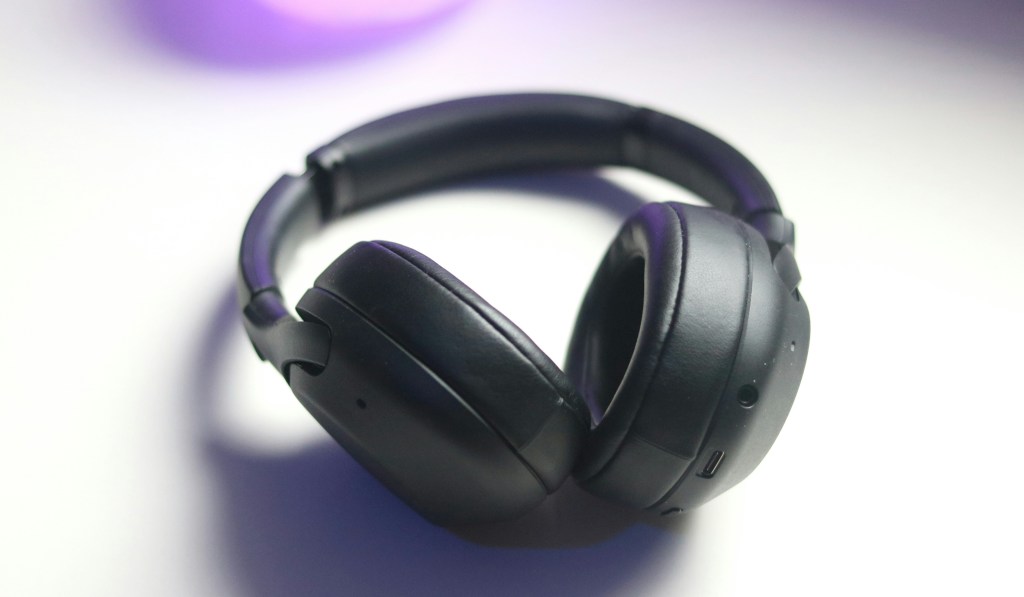
A stereotype of Autism is that we lack empathy. I can’t speak for every Autistic person, but at least for myself, I sometimes feel I have too much empathy. I am caught up in how my existence, in its most natural form, might be inconveniencing or uncomfortable for others. Am I stimming too loudly? Am I moving in a distracting way? Do I seem rude if I put on my headphones? Should I laugh at the joke even if I don’t get it? I care more about how other people feel than I do about myself, and that often gets me into sticky situations. There are consequences to being selfless for Autistic people. Masking is exhausting, advocating is divisive, and disclosing can be dangerous. I say yes to things I want to say no to, and I don’t implement lifestyle changes that would genuinely relax and comfort me. It’s not that I lack empathy; it’s that I have a different style of communication, and therefore, my empathy is expressed differently.
Non-Autistic people are privileged and, oftentimes, ignorant of that privilege. While I am counting the seconds of eye contact and thinking about where I’ve placed my hands in relation to their hands, they are solely invested in the act of building community on their terms. The majority of non-Autistic people do not adapt their behaviours or their environment to fit the needs of Autistic conversation partners, because they never consider that those needs might differ from their own. What can be more selfish than that?
I think Autistic people should be as selfish as they want to be. They live in a world that isn’t built for them (if you subscribe to the social model of disability), and their attempts to self-advocate, even in minute ways, get labelled as “demands” or “adaptations” rather than as a natural variety in behaviour that exists among humans. Selfishness is a part of building community; it gives us the means to take care of ourselves. Without being selfish, how could we express and differentiate ourselves? How would we know who we love and who we tolerate? Everyone, not just Autistic people, deserves consideration from time to time. It is what keeps us safe, happy, and comfortable. And everyone, including Autistic people, deserves that for consideration not to be a big deal.
 Simone Brown
Leave a comment