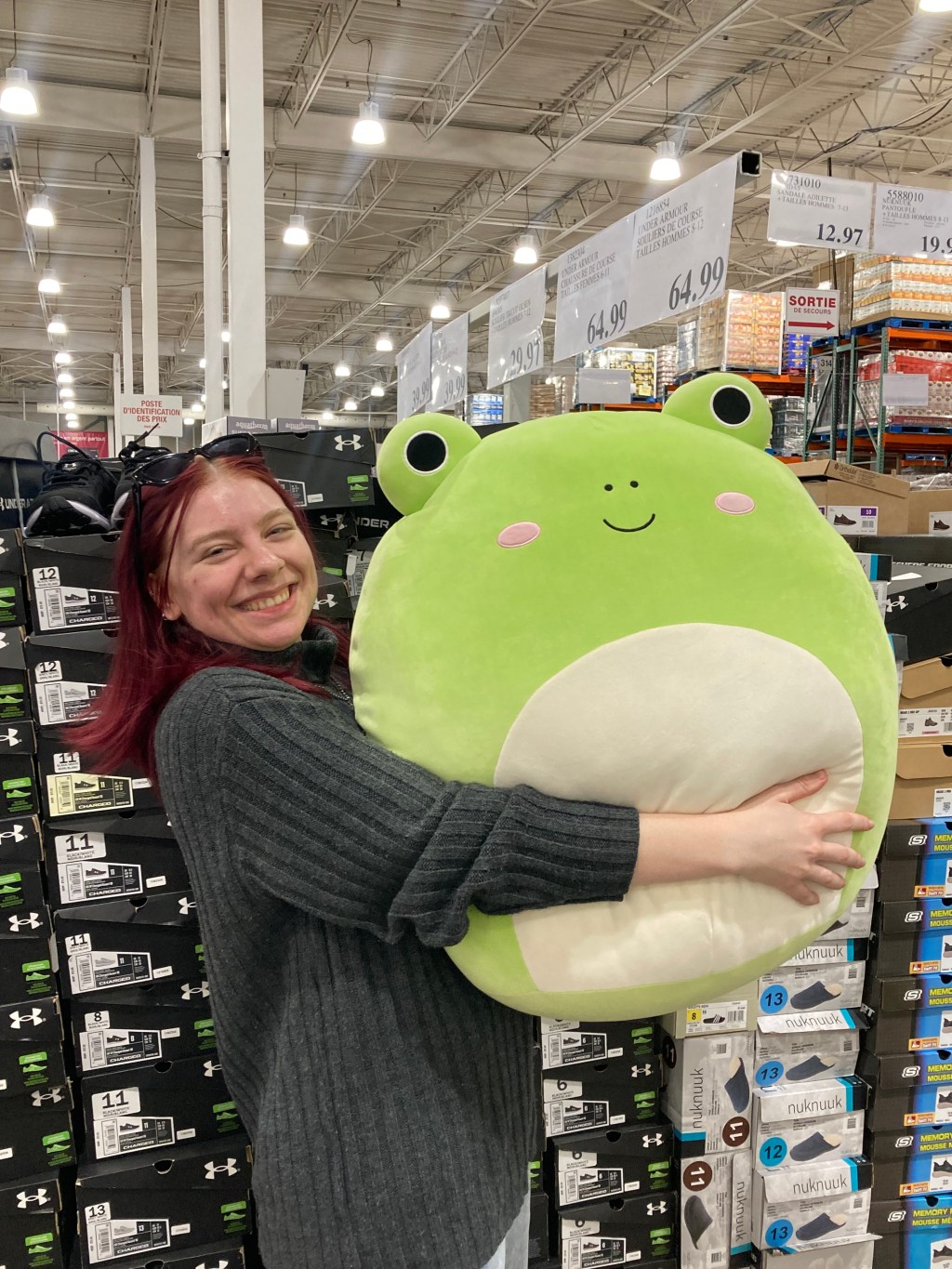
I am weird, and I want to be weirder. There are a lot of words you can swap for ‘weird’ if only you approach it from another angle. Whimsical. Strange. Interesting. Off-putting. Exciting. I choose weird because I have always been, primarily, weird. Even to myself, I feel weird. I look in the mirror and see two arms and two legs and a smile, but beyond that, I am a mystery. My quest to be weirder is part of a larger quest to know myself.
I spent a lot of my childhood and adolescence feeling weird. It seemed like I always laughed too loudly or took the joke too far or put my elbows on the table in front of my grandparents. It’s the little things that make you weird, so I spent a lot of time criticizing the little things in others. Not often out loud and certainly not to their faces, but I had a consistent ‘mean girl’ inner monologue. The moments I voiced my thoughts were with others equally as concerned about seeming weird, coalescing our shared insecurity into the horrible judgment of our peers in the hopes that the group would never turn their critical eye on me. I distinctly remember moments in high school where I wish I had spoken up, had turned away, had ended the brutal tirade against weirdness I was a part of. Instead, because I knew what I was hiding, I joined in.
I don’t blame myself for how I acted as a teenager. It sucks being 15, and it sucks even more being 15 in the wrong crowd. However, the impact of my actions was such that I undermined the individuality of those around me, and that has to be acknowledged. How can I hope to grow weirder if I am not willing to admit what weirdness once was to me? Obviously, I’m not perfect. I am extremely opinionated, yet I now try to judge based on actual harm rather than the presence of social faux pas. I cannot rewrite my adolescent perspective on weirdness (though I try), but I can reclaim the word today.
In order to be weirder, I have to open myself up to the possibility.
The first step to being weird is to admit you are still a little scared of being weird. Aspiring to be loved by everyone only leaves you scattered and lacking any true substance of your own. To be weird is a leap of faith. More than trusting others to accept your weirdness, you are trusting yourself that you can handle rejection. Fear should not hold you back, but it should be acknowledged. Being authentic is a skill you have to cultivate gently, gradually, and deliberately.
It is a conscious effort on my part to not walk back my weirder moments. I’ve always been anxious about being ‘too much,’ so it feels antithetical to pursue being even ‘more.’ What carries me through is the reminder that I deserve the space I take up, especially when I fill the space with love and kindness. I also doubt I’m the first or last person to feel this way, so if others found a way to push through the fear, why can’t I?
The second step to being weird is to be curious. Start externally; consume anecdotes simply for the love of knowledge. Ask questions to others even when you think you may know better. You never know what you might learn. Search through magazines and borrowed textbooks to encounter things you’ve never heard of before. Once it feels natural, turn that curiosity inwards. You have wants, needs, and interests. So long as you remain curious, you will never stop unravelling parts of yourself. Engage in the hobbies you have deeply, with passion for the process itself. Ask yourself ‘why’ constantly, especially when the answer feels obvious. Even in monotony, there could be something new if only you are willing to look for it.
A short list of things I have learned recently: the human heart beats over one billion times in a lifetime, I don’t like the taste of salmon, the public library is worth a visit, tongue ties do not affect your articulation, the New York Times crossword is harder than it looks, my friends love me, I am not afraid of being alone (most of the time).
The people I shared it with: my friends, my boyfriend, my parents, my brother, my sister, my clients, random strangers, my diary, this essay.
The third step to being weird is to find weirder people. People who do the very things you used to cringe at. People who exude love and kindness and exuberance. People who cannot stop talking about their latest obsession. Soak up their knowledge like fresh bread dipped into homemade soup. Whether they care about whales or romance novels, the fact that they care makes them more engaging and interesting.
The irony is not lost on me that the very people I used to dismiss are now the catalyst of my own self-improvement. Everyone is weird in their own ways, but to be weirder, I have to seek out people who are unapologetically weird or, at the very least, aware of the pressures to conform to normality. We don’t all have to be the same brand of weird; it’s enough to be weird together. I think community is strongest with authenticity and that strength is what allows self-confidence to bloom.
My favourite moment of the last year was singing karaoke with new friends, competing on who could sing the loudest irregardless of pitch. I’m sure we seemed (and sounded) weird looking in from the outside, but I don’t want to be on the outside looking in. It meant immeasurably more to me to be off-key and happy than rehearsed and aloof.
The fourth step to being weird is to embrace being uncomfortable. Perhaps you learn something from your search for knowledge that challenges your worldview. That’s uncomfortable. Don’t shy away from the implications of this new knowledge; bask in that discomfort passes until it passes (which it will (you’ll still be weird)). Discomfort can also arise in your relationships. Even with close friends and family, sometimes your weirdness will still be exactly that: weird. In those moments, you have to appreciate that misalignment without taking it to heart. Trust that the people who love you will accept inconsequential awkward moments with open arms and also call you out when you’re being too flagrant.
The point of my writing is never to shame someone for being too ‘normal’ (as if that exists) or demand someone be a manic-pixie-dream-girl caricature, but to encourage social change towards acceptance of the self and others. If something feels inauthentic, it’s not weird, it’s wrong. Not every facet of your being has to resist the status quo for you to be weird in your own right. Weirdness is just a word. I do not care if you are weird like me, weird like someone else, or don’t consider yourself weird at all.
Still, I hope you’re a little weirder than you were yesterday.



 Simone Brown